You've written the book. Now make sure it reads like one. Here's why the final editorial stage matters more than most business authors realise – and what to look for in an editor.
You've spent months – maybe years – writing your book. You know what you want to say. You've restructured it, rewritten it, shared it with trusted readers and now it's nearly ready.
Nearly.
That gap between nearly ready and actually ready is where I work.
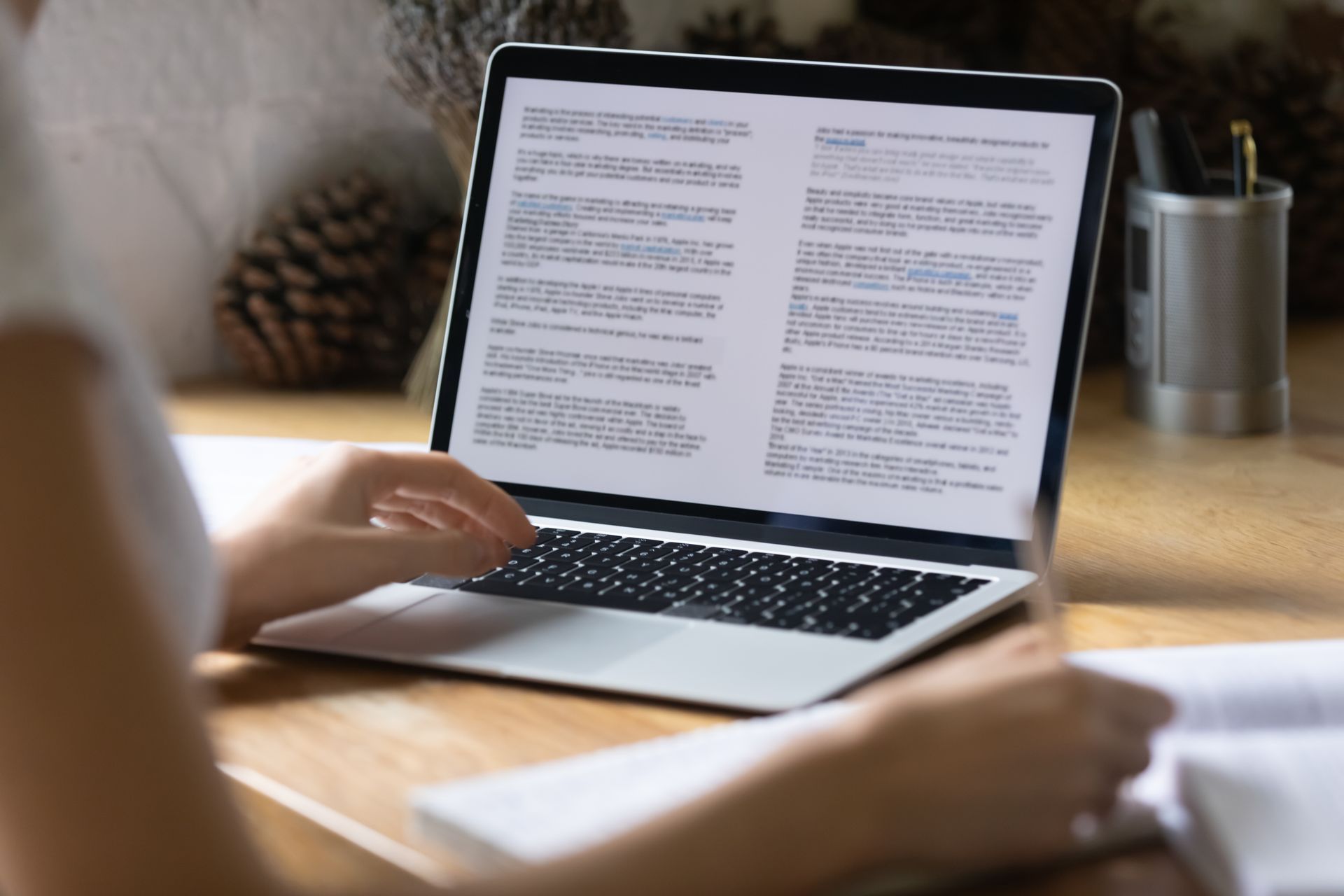
I'm a line editor and proofreader for business authors – consultants, leaders, professionals and entrepreneurs who have something genuinely worth saying and want to make sure it lands the way they intend. Not a structural editor who will ask you to rethink your chapters. Not an AI tool that will smooth out your voice along with your errors. A human reader with 25 years of editorial experience who will read your manuscript carefully, flag what isn't working at the sentence and paragraph level, and make sure every page reflects well on you and your ideas.
Here's why that matters more than you might think.
Your manuscript is not as ready as you think
This is not a criticism. It's almost universally true.
When you've written something – especially something built on years of expertise, talks you've given dozens of times, or material you know inside out – it's almost impossible to read it fresh. Your brain fills in the gaps, skips the repetitions and smooths the transitions automatically. You read what you meant to write, not what's actually on the page.
A professional editor reads what's actually there. And what's actually there is almost always different from what you thought you'd written.
One of my recent clients, an internationally recognised change leadership expert who had previously published with Hachette and Wiley, assumed his manuscript was largely ready when he brought it to me. His response when he saw my first edit: "Gosh, you are so wonderfully thorough. Thank you! And I thought it was in good shape. Ha. The importance of a professional editor!"
He knew what he was doing. He had a publisher with one of the world's leading houses behind a previous book. And still – the manuscript needed work that only a fresh pair of experienced eyes could provide.
The difference between developmental editing, line editing and proofreading
These three terms get used interchangeably by authors who are new to the publishing process, but they describe very different stages of work.
Developmental editing happens early. It's about structure, argument, narrative arc – does the book work? Are the chapters in the right order? Is the central argument clear? This is the stage where big changes happen, sometimes including significant restructuring or rewriting. It requires a specialist with deep expertise in book structure and publishing.
Line editing happens once the structure is settled. It's about how the book reads at the sentence and paragraph level – clarity, rhythm, consistency of voice, transitions between ideas, repetition, register. This is where a manuscript that is structurally sound gets refined into something genuinely readable.
Proofreading is the final stage. Spelling, grammar, punctuation, formatting, consistency of style – the detailed accuracy check before the manuscript goes to layout or publication.
I work at the line editing and proofreading stages. If your book isn't structurally ready yet, I'll tell you honestly and point you towards the right kind of help. But if your book is structurally complete and you need it refined and checked before publication, that's exactly what I do.
Why AI gets this wrong
AI editing tools have improved significantly and have a legitimate role in the writing process.
I use them myself, carefully and within strict boundaries.
But there are things a human editor does that AI cannot replicate – at least not yet, and not reliably.
AI tools tend to standardise. They smooth out inconsistencies, which sounds helpful until you realise that some of those inconsistencies are your voice. The slightly unusual rhythm that makes your writing distinctive. The word you always use that doesn't quite follow convention but feels exactly right. A human editor preserves what's working and changes what isn't – an AI tool can't always tell the difference.
For business authors in particular – where your credibility, expertise and personal authority are embedded in how you write – losing your voice is a serious risk. Your readers chose your book because they wanted to hear from you, not a smoothed-out algorithmic version of you.
What I look for in a business manuscript
When I work on a business book I'm looking for several things simultaneously.
Consistency of voice: does the book sound like one person throughout, or does the register shift between chapters? This is particularly common in books assembled from talks, workshops or previously published articles.
Clarity of argument: at the line level, is each point being made as clearly as possible? Are there sentences that say the same thing twice? Paragraphs that bury the key idea at the end instead of leading with it?
Rhythm and readability: does the text flow? Are there sentences that are too long, too dense or too similar in structure? Business books need to be authoritative but also readable – the best ones feel effortless even when the ideas are complex.
Consistency of style: terminology, capitalisation, formatting, references. These details matter more than most authors realise, and inconsistency erodes credibility subtly but persistently.
Who I work with
I work particularly well with business authors whose books sit in the world of leadership, change, faith, social impact, conservation or professional expertise – subject areas where I understand both the content and the audience.
I take on a small number of author projects each year alongside my B2B communications and proofreading work. This is intentional – I want to give every manuscript the attention it deserves rather than processing books at volume.
If you're writing a business book and you're approaching the final editorial stages, I'd love to hear from you. Even if the timing isn't right yet, an early conversation costs nothing and means you'll know exactly what to expect when the manuscript is ready.
See my Portfolio and Case Study
The Edit Desk