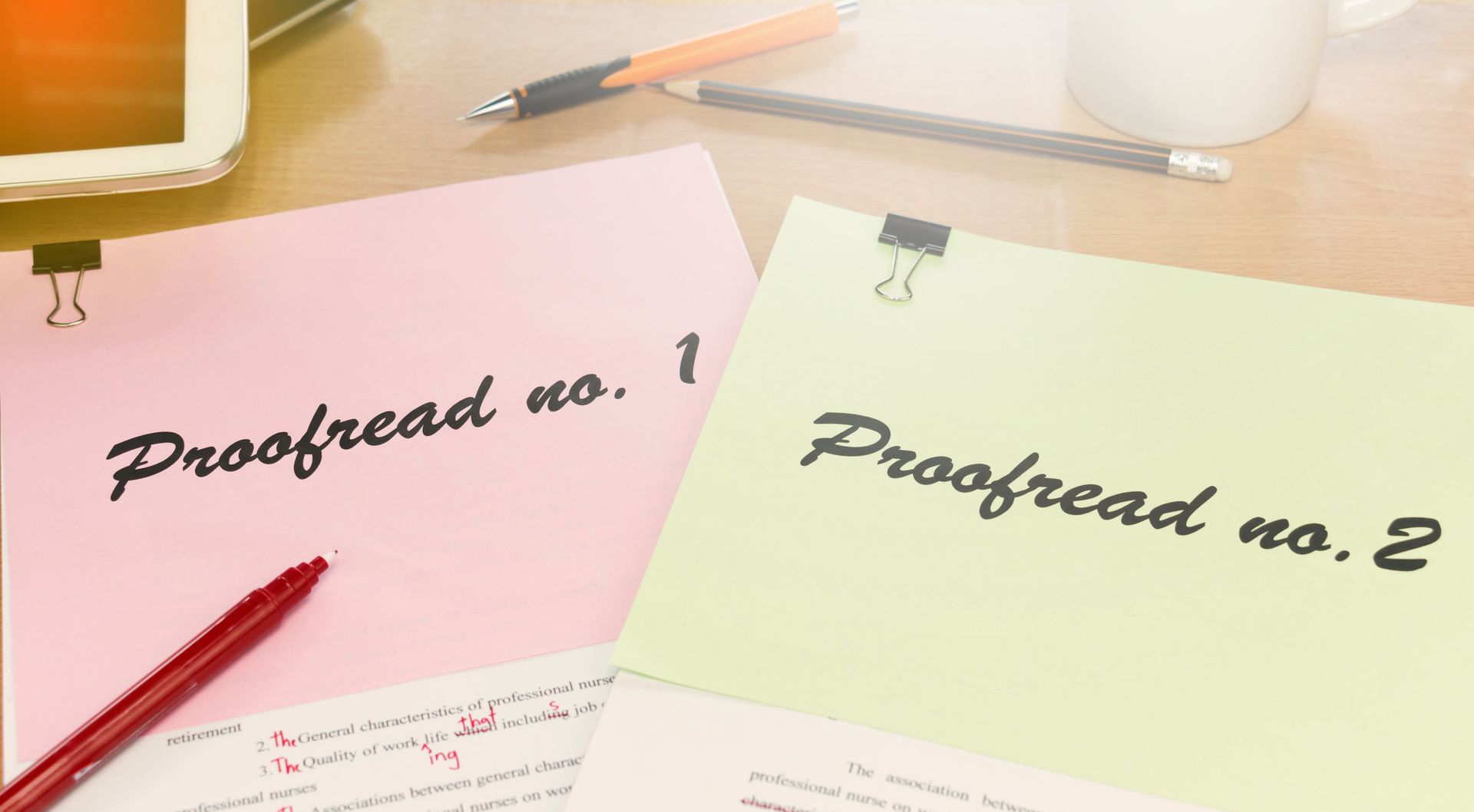
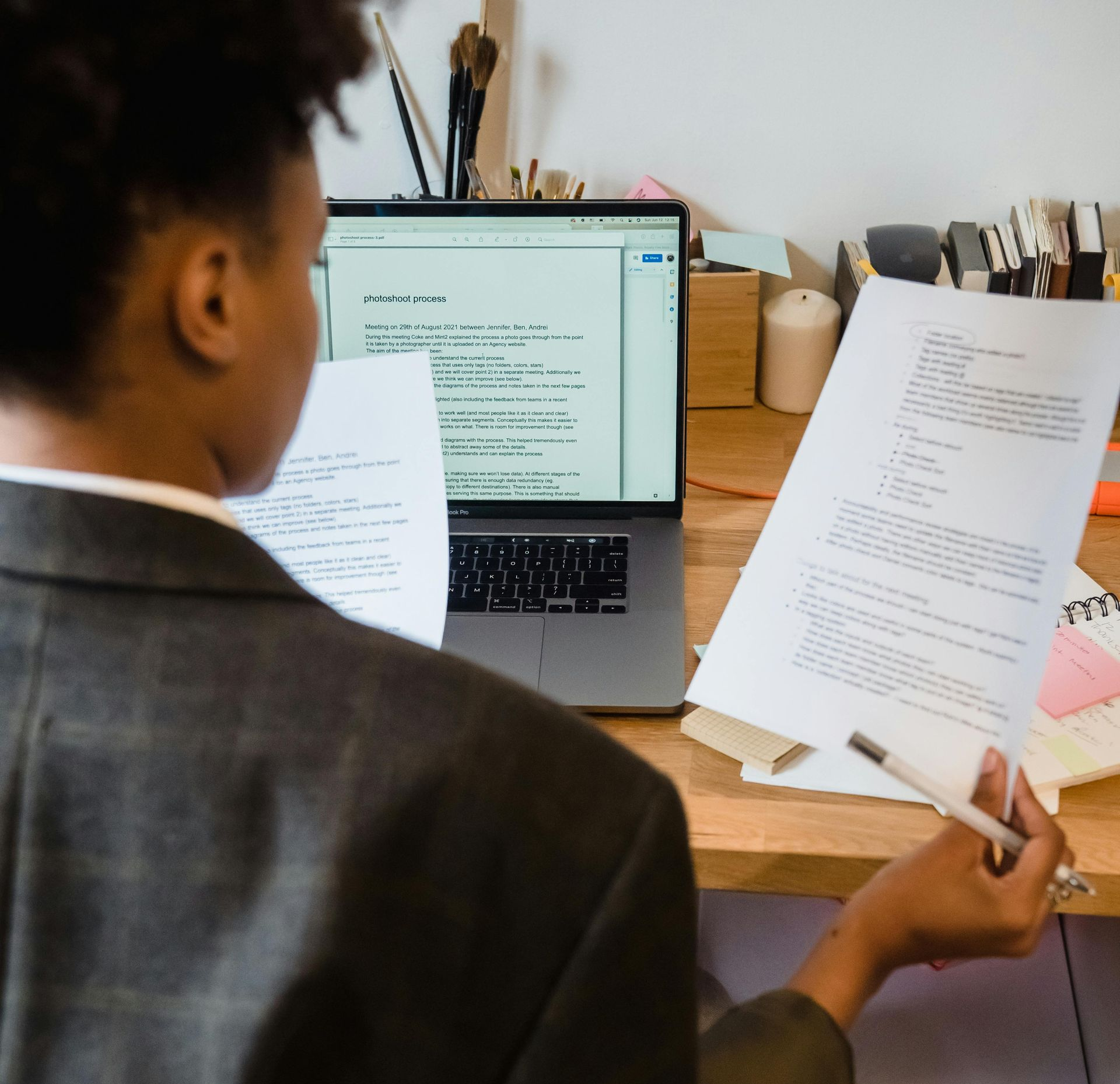
Professional proofreaders typically fix errors in spelling consistency, grammar, clarity, formatting and factual accuracy.
How is it that no matter how many times you've read something, when you pick it up a week later you notice a glaring error? After 30 years working in business publishing – as a project manager and a professional proofreader – I’ve seen exactly how these mistakes slip through.
I've had clients come to me and say:
"We think we need a proofreader as we keep missing things ... it's been read by the project manager, designer, in-house reviewing teams, grammar checkers and the printer – yet no one noticed that the running header was from a previous version / the photo was upside down / the data was referenced to the wrong place / the link was broken...".
In most cases the issue isn’t poor writing. It’s that complex documents pass through many hands – writers, managers, designers and automated grammar tools – and each stage assumes someone else has checked the details. That’s when small mistakes slip through.
What errors do professional proofreaders often find and correct?
Professional proofreaders typically correct errors in spelling, grammar, punctuation, formatting, consistency and factual references. They also check headings, cross-references, links and layout details to ensure a document is accurate and professionally presented.
When businesses and charities bring in a proofreader, the issues are rarely just about basic typos. Here’s the kind of areas I would work on for, say, an annual report:
UK spelling and language consistency – for public-facing documents, these details matter.
- US spellings in UK documents (e.g., tire > tyre) (or vice versa)
- Inconsistent use of -ise/-ize endings
- Incorrect UK punctuation conventions
- Date format inconsistencies (e.g., 3 March 2026 vs 03/03/26)
Grammar and sentence-level issues – these are often missed because the sentence 'sounds right' to the writer.
- Comma splices and run-on sentences
- Subject–verb agreement errors
- Inconsistent tense usage
- Misplaced modifiers that subtly change meaning
Clarity and flow problems – proofreaders aren't just checking mechanics, they're protecting readability.
- Overlong sentences (especially in reports)
- Repetition (particularly in AI-generated content)
- Overuse of jargon
- Paragraphs trying to cover multiple ideas
Formatting and consistency – in annual reports, formatting errors reduce perceived professionalism.
- Inconsistent heading levels
- Misaligned bullet formatting
- Uneven spacing
- Inconsistent capitalisation of job titles and departments
Accuracy and detail checks – these kinds of errors carry reputational risk.
- Misspelled names of trustees or directors
- Incorrect financial figures carried forward
- Broken links
- Incorrect cross-references ('see page 14' when it’s page 16)
If you’d like a professional set of eyes on your report, proposal or website copy, I offer fast business proofreading with clear turnaround times.
So why do mistakes slip through internal reviews?
When I was a
Publications Officer, I had a team of professionals to support me in bringing a publication to print: specialist, qualified authors, graphic designers, printers and experienced colleagues. When mistakes happened, it wasn't because any of us were being careless. They slipped through because of
psychology and
process.
- Familiarity blindness
When you’ve read a document multiple times, your brain stops seeing errors. You read what you meant to write – not what’s actually there. This is especially common with strategy documents, Board reports and long annual reports.
- Time pressure
Internal teams are often balancing multiple deadlines, reviewing content late in the process and proofreading immediately after writing. Effective proofreading requires distance and focused attention – two things busy teams rarely have.
- Group assumption
In internal reviews, responsibility has a tendency to become diffused. Each person might assume that someone else has 'probably' checked the document for grammatical accuracy. So then minor inconsistencies are passed over, formatting errors go unnoticed and small inaccuracies get missed.
- Emotional attachment
Writers are often attached to their phrasing. An external proofreader won't be influenced by internal politics or attachment, and they won't hesitate to suggest improvements in the way an internal colleague might. That neutrality can be invaluable when you have a lot of stakeholders involved.
The clients that employ my proofreading services are most often those that recognise that they cannot effectively proofread their own work.
Is professional proofreading worth it for small businesses?
Of course, my aim is to help all clients – whether they're a global corporation or a small business – but sometimes it might not be necessary to use a proofreader. It really depends on the document.
If your document aligns with any of these communications, then the errors will cost a lot more than the cost of proofreading:
- The content is public-facing (website, brochure, proposal)
- You’re pitching for funding or contracts
- You’re presenting to investors or stakeholders
- The document represents your brand long-term
- You’ve used AI to draft it
However, if your document is more like this, then it may not be necessary to use a proofreader:
- The document is informal internal communication
- It’s low-risk and short-lived
- It has minimal external visibility
Professional proofreading isn’t necessarily about perfectionism – it’s about proportion.